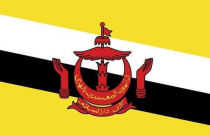
Brunei
Head of State: Hassanal Bolkiah
Capital: Bandar Seri Begawan
Language(s): Malay, English
Currency: B$ (Brunei Dollar)
Ministry of Foreign Affairs & Trade of Brunei Darussalam Website: www.mfa.gov.bn
Brunei Darussalam, abbreviated as Brunei, spans 5,765 square kilometers, with Bandar Seri Begawan as its capital. It is located in the northwestern part of Kalimantan Island, bordered by the South China Sea to its north, Malaysian state of Sarawak to its south, east and west. It is separated into two parts by the Sarawak district of Limbang to the east and west. The coastline is about 162 kilometers long and there are 33 islands, with plains along the coast and mountains in the interior. The climate is tropical rainforest, hot and rainy all year round. The average annual temperature is 28. The year is divided into two seasons, the dry season and the wet season, with an annual rainfall of 2500-3500 mm. Malay is the national language, English is commonly spoken, Islam is the state religion, and other religions are Buddhism and Christianity, etc. On September 30, 1991, China established diplomatic relations with Brunei.
In 2024, the People's Republic of China and Brunei Darussalam further strengthened their friendly exchanges and cooperation in various fields.
The two countries enjoyed frequent high-level exchanges. In May 2024, Brunei’s Second Minister of Foreign Affairs,Dato Seri Paduka Hj Erywan Yusof, visited China. In October,Her Royal Highness Princess Hajah Masna, Ambassador-at-large of Brunei’s Ministry of Foreign Affairs, made an official visit to China. In October, Vice President Han Zheng visited Brunei. In February 2025, Sultan of Brunei Haji Hassanal Bolkiah Mu'izzaddin Waddaulah paid a state visit to China. During this visit, the two sides issued a Joint Statement on Advancing the Strategic Cooperative Partnership towards a China-Brunei Community with a Shared Future.
Energy cooperation was further deepened. Enterprises from both nations are collaborating in offshore oil and gas resource development based on commercial principles, international law, and mutual respect, equality, and mutual benefit. Phase one of the Hengyi Industries Sdn Bhd has been fully operationalized.
Exchange and cooperation in all areas were further boosted. The construction of the Guangxi-BruneiEconomic Corridor has entered a phase of institutionalization and standardization. Both sides have successfully initiated cooperation on port, fishery, and spice projects, achieving notable progress. Through platforms such as the China-ASEAN Expo and the China International Import Expo, both countries aim to promote specialty goods and services and expand trade. Smooth cooperation in agriculture and fisheries has led to the signing of protocols for the export of Brunei’s farmed and wild aquatic products to China.
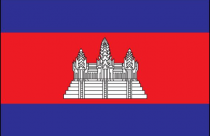
Cambodia
Head of State: His Majesty King Norodom Sihamoni
Head of Government: Prime Minister Hun Sen
Capital: Phnom Penh
Language: Khmer
Currency: Riel
Ministry of Foreign Affairs & International Cooperation of Cambodia Website: www.mfaic.gov.kh
The Kingdom of Cambodia, abbreviated as Cambodia, spans about 180,000 square kilometers, with Phnom Penh as its capital. It is located in the southern part of the Indochinese Peninsula in Southeast Asia, bordered by Vietnam to its east and southeast, Laos to its north, Thailand to its west and northwest, and the Gulf of Thailand to its southwest. The Mekong River runs from north to south across the whole country. The government of Cambodia is a constitutional monarchy. The King is the supreme head of state, and the National Assembly is the highest authority and legislative body, and the Senate has the right to consider the bills passed by the National Assembly. Cambodia has a tropical monsoon climate with an average annual temperature of 24 and an average annual rainfall of 2000 mm. Cambodian is the official language and English is more common in the government sector. On July 19, 1958, China established diplomatic relations with Cambodia.
In 2024, the building of the China-Cambodia community with a shared future has entered a new era characterized by high quality, high level and high standards, with increasingly deepening political mutual trust, accelerating practical cooperation, and thriving people-to-people and cultural exchanges.
The two countries had frequent high-level visits.In February and August, King Norodom Sihamoni and Queen Mother Norodom Monineath came to China for recuperation twice.In March,Samdech Techo Hun Sen attended the Boao Forum for Asia Annual Conference 2024 as President of the Supreme Privy Council to His Majesty the King of the Kingdom of Cambodia.In August and December,King Norodom Sihamoni visited Xinjiang Uygur Autonomous Region and Hainan Province respectively.In September,National Assembly President Khuon Sudary visited China.In November,Prime Minister Hun Manet attended the 8th Greater Mekong Subregion Summit in Kunming.
In April,Member of the Political Bureau of the Communist Party of China Central Committee and Foreign Minister Wang Yi visited Cambodia and met with Prime Minister Hun Manet and President of the Senate of Cambodia Hun Sen respectively and had talks with Deputy Prime Minister and Minister of Foreign Affairs and International Cooperation Sok Chenda Sophea.Wang Yi and Deputy Prime Minister Sun Chanthol co-chaired the seventh meeting of the Cambodia-China Intergovernmental Coordination Committee.In October,Chinese Premier Li Qiang met with Prime Minister Hun Manet on the sidelines of the leaders' meetings on East Asia cooperation held in Vientiane.
Economic and trade cooperation was carried out smoothly with remarkable growth in bilateral trade volume.In 2024, the two-way trade volume reached US$17.8 billion, an increase of 20.3% year-on-year, in which China exported US$15.3 billion, up by 20.2%, and imported US$2.4 billion, up by 20.7%.
The two countries continued to deepen their cooperation in all areas. The two parties maintained the good momentum of exchanges and the two militaries had close interactions. In September, Deputy Prime Minister and Minister of National Defence Tea Seiha attended the 11th Beijing Xiangshan Forum.In December,President of the Cambodian People's Party and President of the Senate of Cambodia Hun Sen visited China.The law enforcement departments of the two countries carried out close cooperation and maintained their close coordination in fighting telecommunication fraud and transnational crimes.In September,State Councilor and Minister of Public Security Wang Xiaohong co-chaired a wrap-up meeting of the Year of Law Enforcement Cooperation activities between China and Cambodia with Cambodian Deputy Prime Minister and Minister of Interior Sar Sokha.
The year 2024 was the Cambodia-China People-to-People Exchange Year. The two sides launched a series of commemorative activities together, which expanded the friendly exchanges between the two peoples and increased their mutual understanding and friendship. Cambodia welcomed 848,952 Chinese visitors in 2024, an increase of 55% year-on-year.
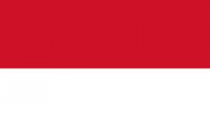
Indonesia
Head of State: President Joko Widodo
Capital: Jakarta
Language: Indonesian
Currency: Rupiah
Department of Foreign Affairs of Indonesia Website: www.kemlu.go.id
The Republic of Indonesia, abbreviated as Indonesia, spans 1,914,000 square kilometers, with Jakarta as its capital. It is located in southeastern Asia, nicknamed the “Land of a Thousand Islands". As the world's largest archipelagic state, it straddles the northern and southern hemispheres, lies across two oceans and two continents, and guards important international trade routes such as the Strait of Malacca, the Sunda Strait and the Lombok Strait. It shares borders with Papua New Guinea, East Timor and Malaysia, and is separated by sea from Thailand, Singapore, the Philippines and Australia. Located in the tropics, the climate is warm and humid, with an average temperature of 25-27. The official language is Indonesian. On April 13, 1950, China established diplomatic relations with Indonesia.
In 2024, bilateral relations between the People's Republic of China and the Republic of Indonesia have maintained a sound momentum of development, achieved positive results in practical cooperation in various fields, and entered a new stage of building a community of shared future.
The two sides have maintained close high-level exchanges. In April 2024, Mr. Prabowo visited China, making China his first visit as President-elect. In August, the two sides held the first Senior Officials' Meeting of the China-Indonesia Joint Foreign and Defense Ministerial Dialogue in Jakarta, the Meeting marks the official launch of the 2+2 mechanism between the two countries and a new level of strategic mutual trust between the two countries. In November, Indonesia President Prabowo paid a state visit to China after officially taking office. During the visit, the two sides issued the Joint Statement between the People's Republic of China and the Republic of Indonesia on Advancing the Comprehensive Strategic Partnership and Building a China-Indonesia Community with a Shared Future.
China has been Indonesia's largest trading partner for 11 consecutive years. From January to August 2024, the bilateral trade volume reached 92.79 billion US dollars, an increase of 1.5% year-on-year. China is Indonesia's second source of foreign investment, Indonesia is China's second largest investment destination in ASEAN.
Cooperation in various fields between the two countries has continued to deepen. The two sides signed cooperation agreements and memorandums in the fields of agriculture, science and technology, industry, commerce, maritime cooperation, education, culture and military, and signed cooperation documents in areas such as maritime joint development, fisheries, mineral resources, green minerals, water resources, conformity assessment, blue economy, housing and export.
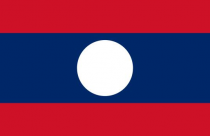
Lao
Head of State: President Bounnhang Vorachith
Head of Government: Prime Minister Thongloun Sisoulith
Capital: Vientiane
Language: Lao
Currency: Kip
Ministry of Foreign Affairs of Lao PDR Website: www.mofa.gov.la
The Lao People's Democratic Republic, abbreviated as Laos, spans 236,800 square kilometers, with Vientiane as its capital, and is the only landlocked country in the northern part of the Indochinese Peninsula. It is bordered by China to its north, Cambodia to its south, Vietnam to its east, Myanmar to its northwest, and Thailand to its southwest. The length of the Mekong River in Laos is 777.4 km, flowing through the capital Vientiane, 234 km as the border between Laos and Myanmar, and 976.3 km as the border between Laos and Thailand. The climate is tropical monsoon and subtropical monsoon, divided into two seasons: rainy and dry, with an average annual temperature of about 26 and a rainfall of about 2000 mm in a typical year. The official language is Lao. On April 25, 1961, China established diplomatic relations with the Lao People's Democratic Republic.
2024 marks the 15th anniversary of the establishment of a comprehensive strategic partnership between China and Laos, the construction of the China-Laos community with a shared future has been expanding and deepening, and cooperation in various fields has achieved fruitful results.
Economic and trade cooperation between China and Laos developed smoothly and Bilateral trade continued to grow rapidly. At present, China is Laos' largest investor, exporter and second largest trading partner. In 2024, the bilateral trade volume was 8.23 billion dollars, a year-on-year increase of 15.9%. Among them, our exports were 3.675 billion dollars, a year-on-year increase of 9.8%; imports were 4.555 billion, a year-on-year increase of 21.4%. China offers support and help to Laos within its capacity. In October, the building of the Mahoso General Hospital in Laos, which was assisted by the Chinese government, was completed. The passenger and freight volume of the China-Laos Railway continued to grow. In 2024, a total of 19.11 million passengers were sent (including more than 301,000 cross-border passengers), a year-on-year increase of 15.2%; 19.64 million tons of goods were transported (including 4.78 million tons of cross-border goods), a year-on-year increase of 10.6%.
The CPC and LPRP worked more closely in the training of officials and theoretical discussions. In December, the CPC and LPRP hold 12th theory seminar in Xi'an. The exchanges and cooperation between the two countries in the fields of culture, education, health, transportation, etc. have developed rapidly, the friendly exchanges and practical cooperation at the provincial (regional) level have become closer, and 5 pairs of sister cities have been newly established.
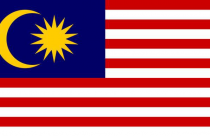
Malaysia
Head of State: Sultan Muhammad V
Head of Government: The Honourable Dato’ Sri Mohd Najib bin Tun Abdul Razak
Capital: Kuala Lumpur
Language(s): Malay, English, Chinese, Tamil
Currency: Ringgit
Ministry of Foreign Affairs of Malaysia Website: www.kln.gov.my
Malaysia, spans about 330,000 square kilometers, with Kuala Lumpur as its capital. It is located in Southeast Asia, and the country is separated into two parts, East and West, by the South China Sea. Peninsular Malaysia is located in the southern part of the Malay Peninsula, bordered by Thailand to its north, Singapore to its south across the Straits of Johor, the South China Sea to its east, and the Strait of Malacca to its west. East Malaysia is located in the northern part of Kalimantan Island, bordered by Indonesia, the Philippines and Brunei. The total length of the country's coastline is 4,192 kilometers. It has a tropical rainforest climate. The average annual temperature is 22-28 in the mountainous areas of the interior and 25-30 in the coastal plains. Malay is the official language, English is commonly spoken, and Chinese is widely used. On May 31, 1974, China established diplomatic relations with Malaysia.
In 2024, relations between the People's Republic of China andMalaysia developed steadily in all fields and their exchanges and cooperation in various fields were upgraded to a new high.
Economic and trade cooperation has achieved remarkable results. China was Malaysia's biggest trading partner for fifteen consecutive years. In April 2024, the fifth meeting of the Joint Cooperation Council of the "Two Countries, Twin Parks"between China and Malaysia was held in Qinzhou, Guangxi. Malaysia’s East Coast Rail Link is also a flagship project of the Belt and Road Cooperation between the two countries and is the largest single project contracted by a Chinese enterprise overseas to date.
Cooperation in other fields between the two countries has continued to deepen. China implements a unilateral visa-free policy for Malaysian citizens holding ordinary passports. Malaysia has implemented a visa-free entry policy for Chinese citizens for up to 30 days. In January 2020, the China Cultural Center in Kuala Lumpur was officially inaugurated and began operations. In November 2021, China and Malaysia signed an agreement on space cooperation and the peaceful use of outer space.
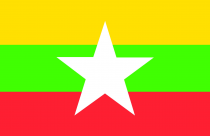
Myanmar
Head of State: President Htin Kyaw
Head of Government: State Counsellor Aung San Suu Kyi
Capital: Nay Pyi Taw
Language: Myanmar
Currency: Kyat
Ministry of Foreign Affairs of Myanmar Website: www.mofa.gov.mm
The Republic of the Union of Myanmar, abbreviated as Myanmar, spans 676,578 square kilometers, with Naypyidaw as its capital. It is located in the western part of the Indochinese Peninsula, bordered by China to its northeast, India and Bangladesh to its northwest, Laos and Thailand to its southeast, and the Bay of Bengal and the Andaman Sea to its southwest. The coastline of Myanmar is 3,200 kilometers, and it is the largest country by area in Mainland Southeast Asia. It has a tropical monsoon climate with an average annual temperature of 27, and the whole year is divided into three seasons: hot, rainy and cool. There are 135 ethnic groups and more than 100 ethnic languages in Myanmar, and the official languages are Burmese and English. On June 8, 1950, China established diplomatic relations with Myanmar.
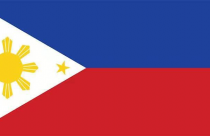
Philippines
Head of State: President Rodrigo Duterte
Capital: Manila
Language(s): Filipino, English, Spanish
Currency: Peso
Department of Foreign Affairs of the Philippines Website: www.dfa.gov.ph
The Republic of the Philippines, abbreviated as the Philippines, spans 299,700 square kilometers, with Manila as its capital. It is located in the south-eastern part of Asia, opposite Taiwan Province of China in the north across the Bashi Strait, and opposite Indonesia and Malaysia in the south and southwest across the Celebes Sea and Balabac Strait. The Philippines is bordered by the South China Sea to its west and the Pacific Ocean to its east. There are more than 7,000 islands of all sizes, among which 11 major islands such as Luzon, Mindanao and Samar constitute 96% of the total area of the country. It has a monsoonal tropical rainforest climate with high temperature, high humidity and many typhoons. The average annual temperature is 27 and the annual rainfall is 2000-3000 mm. Filipino is the national language and English is the official language. On June 9, 1975, China established diplomatic relations with the Philippines.
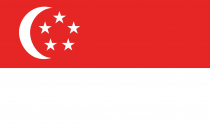
Singapore
Head of State: President Halimah Yacob
Head of Government: Prime Minister Lee Hsien Loong
Capital: Singapore
Language(s): English, Malay, Mandarin, Tamil
Currency: S$ (Singapore Dollar)
Ministry of Foreign Affairs of Singapore Website: www.mfa.gov.sg
The Republic of Singapore, abbreviated as Singapore, spans about 733.2 square kilometers, with Singapore as its capital. It is a tropical city-state, located at the southern tip of the Malay Peninsula and the entrance to the Strait of Malacca. It is bordered by Malaysia to its north across the Straits of Johor and Indonesia to its south across the Singapore Strait. The country consists of Singapore Island and 63 nearby islands, of which Singapore Island accounts for 88.5% of the country’s area. The terrain is low and flat, with an average elevation of 15 meters and a maximum elevation of 163 meters, and a coastline of 193 kilometers. It has a tropical maritime climate, with high temperature, humidity and rain all year round. The average annual temperature is 24-32, and the average annual rainfall is 2345 mm. The official languages are Malay, Chinese, Tamil and English. On October 3, 1990, China established diplomatic relations with Singapore.
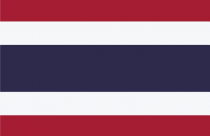
Thailand
Head of State: King Maha Vajiralongkorn
Head of Government: Prime Minister General Prayut Chan-o-cha
Capital: Bangkok
Language: Thai
Currency: Baht
Ministry of Foreign Affairs of Thailand Website: www.mfa.go.th
The Kingdom of Thailand, abbreviated as Thailand, spans 513,000 square kilometers, with Bangkok as its capital. It is located in the south-central part of the Indochinese Peninsula, at the center of ASEAN, with the Gulf of Thailand in its southeast and the Andaman Sea in its southwest. The country is bordered by Myanmar to its west and northwest, Laos to its northeast, Cambodia to its east, and Malaysia to its south. It has obvious advantages in terms of location. Most of the country has a tropical monsoon climate, divided into three seasons: hot, rainy and cool, with an average temperature of 27. Thai is the national language, more than 90% of the people believe in Buddhism, the Malays believe in Islam, and a few people believe in Christianity, Catholicism, Hinduism and Sikhism. On July 1, 1975, China established diplomatic relations with Thailand.
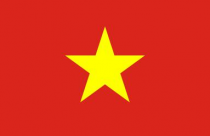
Viet Nam
Head of State: President Tran Dai Quang
Head of Government: Prime Minister Nguyen Xuan Phuc
Capital: Ha Noi
Language: Vietnamese
Currency: Dong
Ministry of Foreign Affairs of Viet Nam Website: www.mofa.gov.vn
The Socialist Republic of Vietnam, abbreviated as Vietnam, spans 329,556 square kilometers, with Hanoi as its capital. It is located in the eastern part of the Indochinese Peninsula, bordered by China to its north, Laos and Cambodia to its west, and the South China Sea to its east and south. The coastline is more than 3,260 kilometers long. Located south of the Tropic of Cancer, it has a tropical monsoon climate with high temperature and a lot of rain. The average temperature is about 24 and the average annual rainfall is 1500-2000 mm. The north is divided into four seasons: spring, summer, autumn and winter. In the south, there are two distinct wet and dry seasons, with most areas having a rainy season from May to October and a dry season from November to April. Vietnamese is the official language, the common language and the main national language. On January 18, 1950, China established diplomatic relations with Vietnam.
 桂公网安备 45010302000218号 Technical Support: KONKE Network